Visiting scholars from Senegal share their expertise and experiences
Research is stronger when it includes diverse perspectives. Four scholars from Senegal are bringing their knowledge to VIU as part of the Queen Elizabeth Scholars (QES) program.
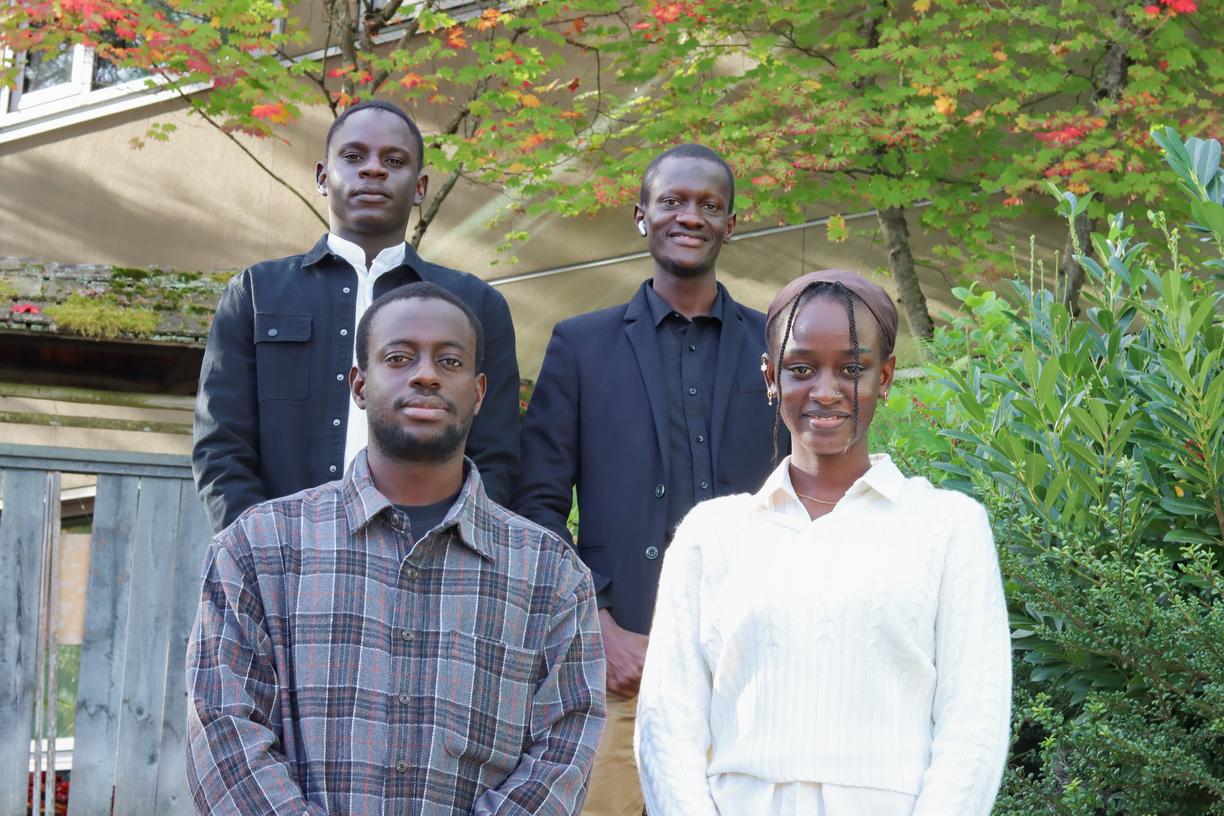
The scholars, Amina Diop, Fadil Koffe, Mamadou Mbaye and Bassirou Ndiaye, are graduate students from Gaston Berger University in the Republic of Senegal. They are conducting individual research projects during their visit to VIU. The QES program fosters research collaborations and provides overseas education opportunities that help participants build relationships and develop skills to become leaders in their communities and around the world.
VIU will send 18 Canadian students to Senegal in three cohorts throughout the summer of 2027 and welcome six Senegalese participants to VIU in total.
“Our goal is to build and institutionalize a North–South partnership that fosters more equitable, decolonial relationships while facilitating knowledge exchange and developing leadership skills across both countries about climate change,” says Lauren Touchant, Chair and Professor of Political Studies, and Coordinator of the VIU QES program.
Meet the scholars and learn about their research.
Amina Diop
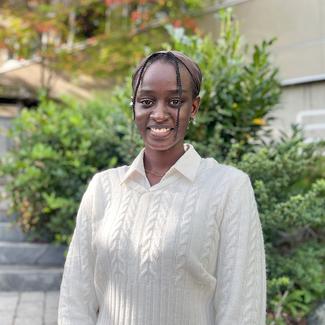
Amina Diop is a master’s student in Political Science specializing in Public Policy. She also works as a debater and communications officer for a community-based association in Senegal. Amina is exploring environmental issues related to public health and natural resource extraction, focusing on zircon and phosphate in Senegal and oil in Alberta.
Her research looks at the health risks associated with extracting these resources and examines policies developed by public actors to address these risks and their environmental impacts.
“Since I am working on the impact of mining activities on public health in Senegal, I thought, why not take this opportunity to conduct a comparative study between Senegal and Canada in terms of resource extraction and risk management?” says Amina.
Amina says one of her most memorable moments was her first day at VIU when the four scholars were walking as a group. The walk became difficult, and at one point she couldn’t keep going and had to sit down.
“Mamadou, Fadil, and Bassirou were so worried that their faces almost changed. Sitting on the edge of a path, I wanted to talk to them to reassure them, but I couldn’t. It was really funny,” she says. “They eventually named the place where we were ‘Amina Street’ as a way of remembering it.”
Fadil Koffe
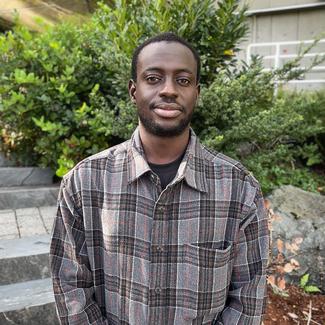
Fadil Koffe, originally from Benin, studies Political Science, focusing on public policy, peace and security. He is interested in governance, sustainable development, citizen participation and the links between climate change and development.
His research examines the role of civil society organizations, particularly environmental organizations, in coastal adaptation governance. It compares non-profit organizations on Vancouver Island with non-governmental organizations in Saint-Louis, Senegal, to see how organizational differences shape strategies and influence climate adaptation policies, beyond participation in consultations.
“I joined the QES program to enrich my research, explore different approaches to climate governance and learn from the Canadian experience,” says Fadil. “This exchange also allows me to compare Senegalese realities with those of a different institutional context.”
Fadil hopes to share Senegalese perspectives, highlighting how climate change is not only an environmental issue but also a social, economic and political challenge. He says in Saint-Louis, coastal erosion and flooding threaten homes, livelihoods and community safety, highlighting the importance of “placing communities at the heart of decision-making and developing genuinely inclusive climate policies.”
Fadil says the warm welcome he received in Canada has been meaningful to him.
“The hospitality I experienced made me feel welcome from the beginning. These values remind me of teranga, the Senegalese tradition of hospitality, showing that solidarity and openness can unite people despite geographical and climatic differences,” he says.
One of his most memorable experiences in Canada was experiencing the cold in Vancouver when he first arrived. It reminded him that climate-related challenges vary across the world.
Mamadou Mbaye
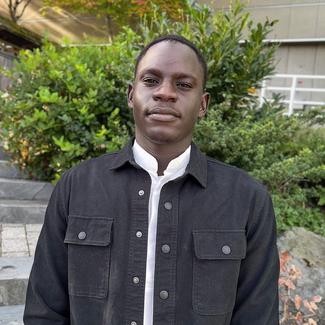
Mamadou Mbaye, from the Thiès region in Senegal, is pursuing a master’s degree in Political Science, specializing in public policy.
His research compares health sector digitization in Senegal and Canada, focusing on the opportunities and challenges related to health-care access, data protection, professional training and institutional adaptation. Mamadou says it’s important to understand the links between digital technologies, public policy and environmental sustainability, as some digital solutions can reduce environmental impacts while creating others.
“In Senegal, digital technology is playing an increasingly important role in the country’s development, particularly through initiatives involving digital infrastructure and data centers. However, this progress raises questions about its environmental consequences, especially its energy and water consumption, as some researchers have pointed out,” says Mamadou. “These issues are still rarely discussed in public debate. Yet digital development is already influencing people’s daily lives in areas such as health care, communication and access to services. It is important to consider how to reconcile digital transformation, improvements in living conditions and environmental protection.”
Mamadou says he joined the program to enrich his academic background, learn about a new culture and exchange ideas with Canadian students and researchers.
“As a master’s student in Political Science at Gaston Berger University, I see this experience at Vancouver Island University as a way to broaden my knowledge, share my Senegalese experience and deepen my research on digital health in Senegal and Canada,” says Mamadou.
Bassirou Ndiaye
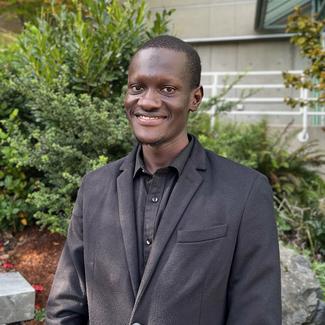
Bassirou Ndiaye is a PhD student at Gaston Berger University in Senegal specializing in Political Science with a focus on public policy analysis.
His research focuses on environmental public policies and the impacts of mining activities in Senegal, particularly phosphate mining in the municipality of Mboro. He also works as a teaching assistant, leading tutorials for undergraduate students in Introduction to Political Science, International Relations and Comparative Politics.
“Environmental issues, particularly climate change, have interested me for a long time. This interest, combined with my doctoral research, has led me to study how environmental issues associated with mining activities are placed on the public agenda, particularly those related to coal mining in the Elk Valley,” says Bassirou. “My research aims to identify the different types of pollution associated with these mining activities and to examine how public authorities respond through climate change mitigation and adaptation policies.”
Bassirou is sharing his knowledge of African political history and Senegalese culture with his Canadian peers. Since arriving in Nanaimo, Bassirou was struck by Nanaimo’s beauty, particularly the greenery and natural surroundings, as well as the hospitality and kindness of Canadians.
“People have been very welcoming and always willing to help and support me. This has really touched me,” he says.
Related Posts