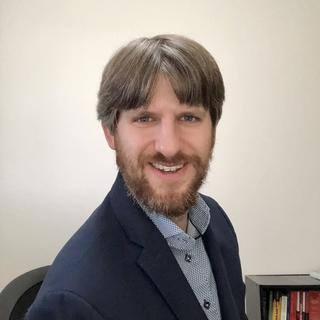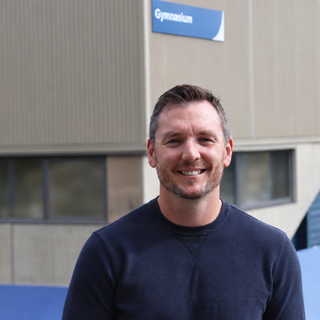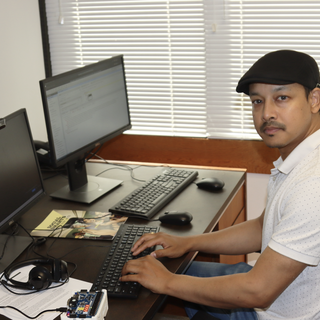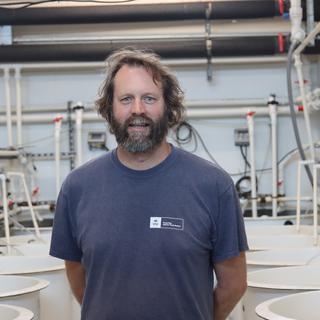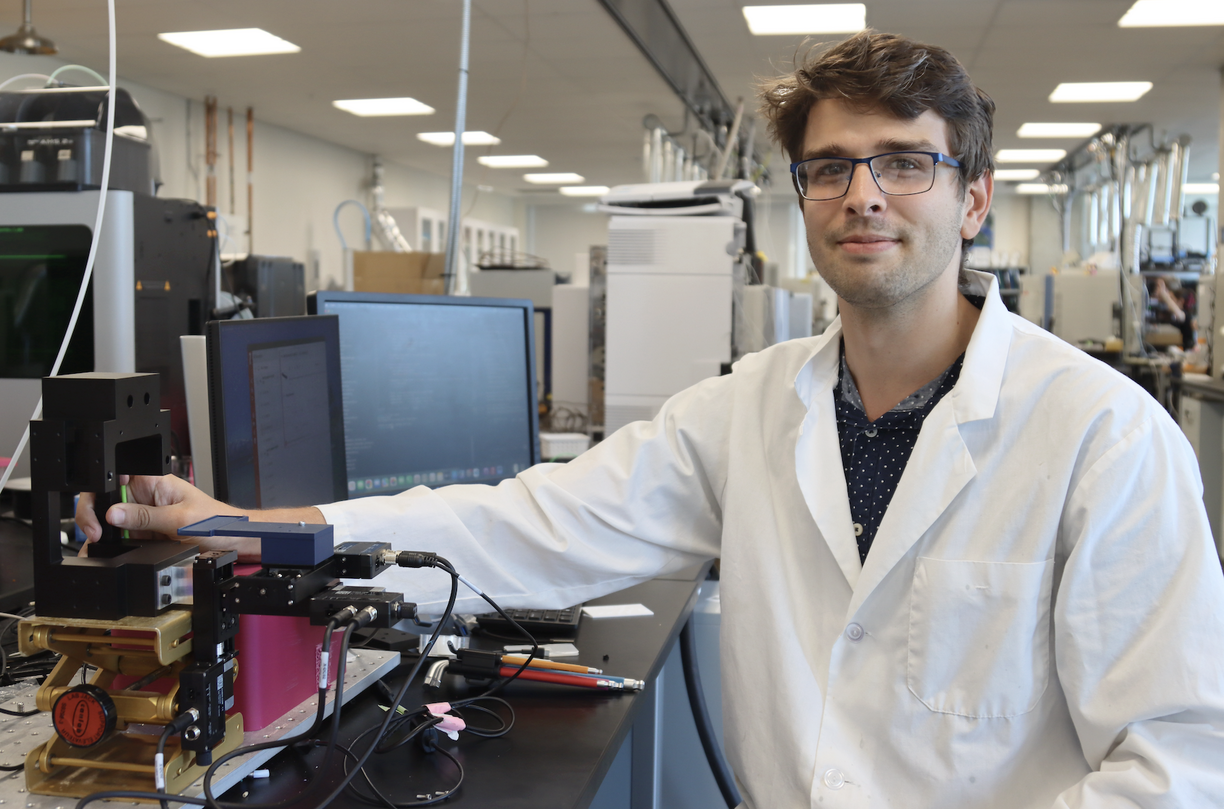
Dr. Joseph Monaghan is developing imaging technology to track molecules inside cells to help researchers better understand cancer and improve future treatments.
VIU postdoctoral researcher Dr. Joseph Monaghan is developing imaging technology that could lead to improvements in cancer treatments.
Small molecules inside cells play an important role in how cells work. But with current technology, it’s hard to see where these molecules are found and how they change over time.
Dr. Joseph Monaghan is a postdoctoral researcher at Vancouver Island University (VIU). He is developing new technology to better understand these changes. The information could help doctors design better cancer treatment plans.
“We want to develop tools to understand how metabolites change over time and space at the cellular level,” said Monaghan. “In the same way you or I might behave differently in the presence of a delicious meal or an unpleasant smell, cells do this too.”
Metabolites are small molecules that help cells work. They include sugars, fats and amino acids that give cells energy, help them communicate and provide the building blocks for proteins and DNA.
Monaghan’s project uses mass spectrometry imaging to see where molecules are found in living tissue. He plans to pair this with stable isotope tracing, where normal atoms in a molecule are replaced with slightly heavier versions. The combination of the two should allow him to map exactly where those atoms end up once an organism consumes the molecule.
Monaghan said knowing what is happening around a cell can help researchers better understand how and why it behaves the way it does.
He is making the imaging system smaller and easier to use. This will allow researchers to create more detailed images and make the technology more accessible.
The technology could lead to improvements in cancer treatments. Tumours contain many different types of cells. These include cancer cells, immune cells that fight disease, and healthy tissues. By showing how molecules are distributed throughout tumours, scientists can better understand how cells interact and how the immune system responds. This information could help guide new approaches to support the body’s ability to fight the disease.
“The end dream is to be able to pick out a cell and see who its neighbours are, which metabolites are present and how they have changed,” he said.
Monaghan has received a Natural Sciences and Engineering Research Council of Canada Postdoctoral Research Award of $140,000. The award allows him to continue this work for the next two years at VIU, in the very lab where his research career began.
“Being involved in applied research in my undergraduate at VIU shaped my career and the way I think about science,” he said. “Getting to pay that forward and work with talented young scientists on this project is an absolute privilege.”
-30-
Media contact:
Eric Zimmer, Communications Officer, Vancouver Island University
P: 250.618.7296 | E: Eric.Zimmer@viu.ca | W: news.viu.ca
The VIU community acknowledges and thanks the Snuneymuxw, Quw’utsun, Tla’amin, Snaw-naw-as and Qualicum First Nation on whose traditional lands we teach, learn, research, live and share knowledge.
Related Posts