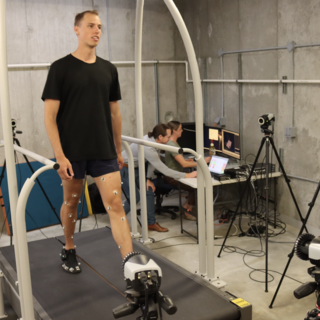
Dr. Jordan Herbison is studying how performance-tracking technology affects young athletes and their teammates.
Dr. Jordan Herbison is researching how technology that measures performance affect youth athletes’ personal and athletic development.
From wearable fitness trackers to performance apps, technology is becoming a bigger part of youth sports and athlete development.
Vancouver Island University (VIU) researcher Dr. Jordan Herbison is studying how those tools affect young athletes and their teammates.
“I’m interested in youth development through sport, not just as athletes but as people in general,” he said.
A two-year Social Sciences and Humanities Research Council Insight Development Grant is helping Herbison with his project.
With a background in sport psychology, the Kinesiology professor knows technology designed to improve athletic performance is expanding. More organizations are adopting wearable devices, artificial intelligence and motion tracking systems.
However, "we don’t know much about the psychological effects on athletes and teams,” said Herbison. “We do know other technologies that promote social comparison – like social media – can have some negative effects on the mental health of youth.”
He wants to know how technology can be used to positively impact youth and team dynamics.
Examples include batting cages that measure swing speed, pitching systems that track ball movement and wearable trackers that record athletic performance.
“We’re using this technology with pre-teens,” he said. “Everybody’s looking at the screen. Everybody’s looking at each other’s scores and comparing who did this and who did that.”
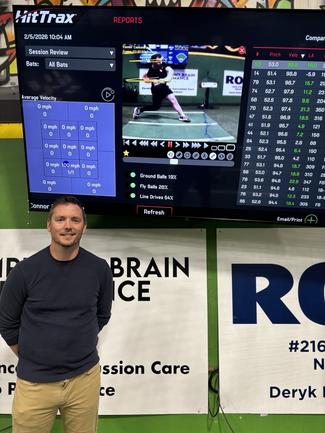
To develop as an athlete, it’s key to “spend time in your own body,” Herbison said. “You need to feel the adjustments that you want to make. When you're looking at a screen, we're not getting that extra mental repetition.”
Herbison will examine whether technology supports the four key parts of positive youth development: connection, confidence, competence and character.
“We’ll be looking at whether the tech is affecting how much connection they have with their teammates," he said. "Is it creating unhealthy competition? Are they treating each other well? Do they believe in their own abilities?”
Herbison’s research team is reviewing existing research on this topic. They are also interviewing athletes, parents and coaches. They will also follow youth teams over a 12-week period to see how technology affects team dynamics and youth development over time.
“The goal is to develop guidance to help parents and coaches use technology in a way that's not undermining development, team dynamics, and mental health,” he said.
Herbison’s research team includes collaborators from Dalhousie University, Queen's University, the Royal Military College of Canada and Western University.
He hopes his findings will help families and community sport organizations make informed decisions.
“If we can figure out how to give coaches and parents some tools to better use the technology, I think that would be beneficial for everybody,” he said.
-30-
Media contact:
Eric Zimmer, Communications Officer, Vancouver Island University
P: 250.618.7296 | E: Eric.Zimmer@viu.ca | W: news.viu.ca
The VIU community acknowledges and thanks the Snuneymuxw, Quw’utsun, Tla’amin, Snaw-naw-as and Qualicum First Nation on whose traditional lands we teach, learn, research, live and share knowledge.
Related Posts