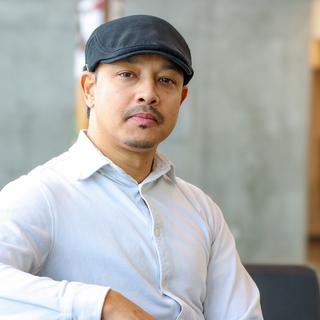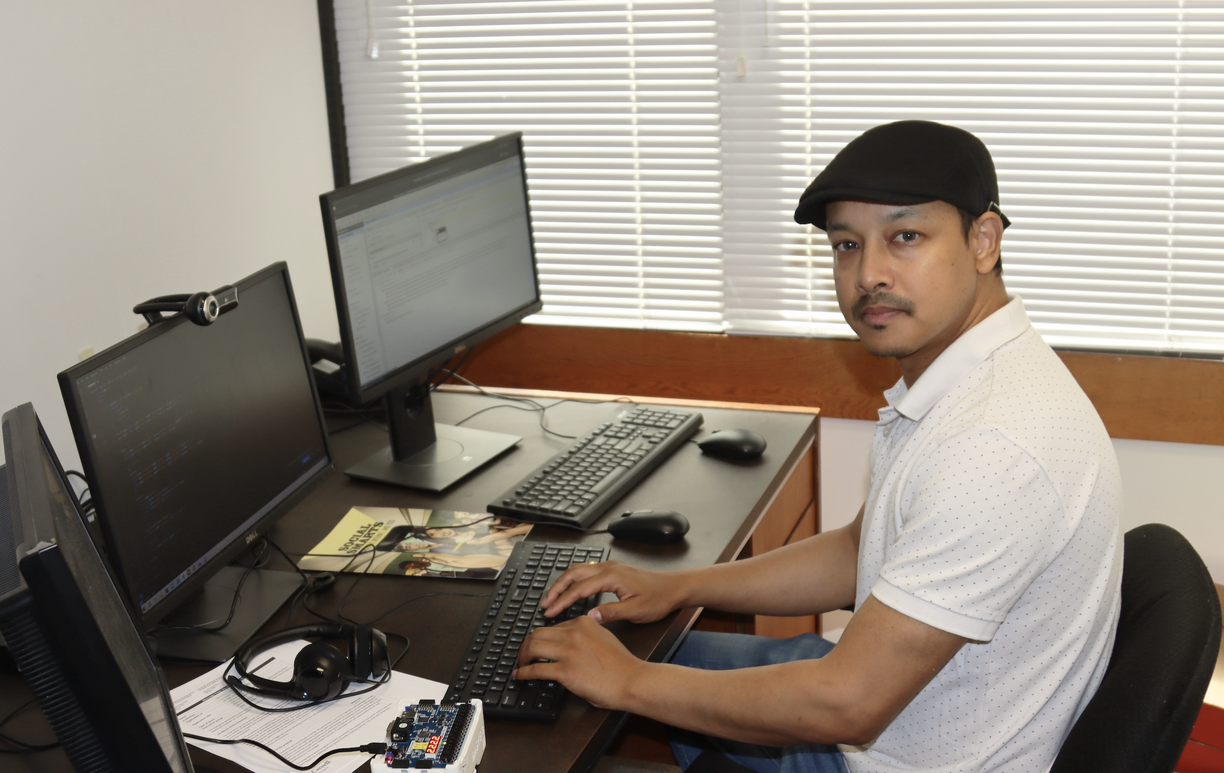
VIU Computer Science Professor Dr. Ajay Shrestha is researching how youth perspectives can help shape AI policies.
VIU researcher Dr. Ajay Shrestha is studying how young people can help shape rules for artificial intelligence.
AI, or artificial intelligence, technology is now part of everyday life. A Computer Science professor at Vancouver Island University (VIU) is studying how to give youth a voice in how this technology continues to develop.
“Young people are often among the first to use AI, but they have little say in how those systems are designed and controlled,” said Dr. Ajay Shrestha.
Shrestha’s two-year project will study AI systems that work across many devices instead of relying on one central company-controlled system. He will examine how these systems affect privacy, decision-making and accountability. His findings will help him recommend ways Canada can manage the technology responsibly.
The project builds on Shrestha’s previous research on youth privacy in AI and smart devices, as well as his work on emerging privacy-preserving AI systems.
“Many AI systems today are still built around centralized control,” he said. “A small number of companies or institutions often control the data, the algorithms and the rules around how the system works.”
A decentralized AI system can learn and make decisions using many different devices instead of relying on one central company-controlled system. For example, a smart phone could help improve an AI tool without sending all its raw information to the company. These technologies may create new opportunities for privacy and user control, but they also raise important questions about responsibility, Shrestha explained.
“A system can be decentralized and still be unclear, unfair, difficult to challenge or poorly governed,” he said.
“There’s a lot of focus right now on how AI can become more powerful or efficient. We also need to ask how AI can become more responsible, understandable and accountable to the people most affected by it.”
Shrestha is talking to policymakers, professionals, educators and community organizations. He hopes to hear what they think about transparency, control, responsibility and what should happen when AI systems cause harm. He will use everyday examples, such as AI tools used in schools or smart devices in homes. The goal is to understand what information and controls people expect from these systems.
“They will be asked what information they need, what controls they expect, who should be accountable and what help people should receive if something goes wrong,” he said.
The Social Sciences and Humanities Research Council is funding the project through an Insight Development Grant.
“It means a lot because it recognizes the importance of building responsible AI research that connects technical understanding with social, ethical and policy questions,” said Shrestha of the grant.
He hopes the project will help create a more responsible approach to AI development and governance in Canada.
“Young people are not only users of AI,” he said. “Their lives and rights are affected by AI technology.”
-30-
Media contact:
Eric Zimmer, Communications Officer, Vancouver Island University
P: 250.618.7296 | E: Eric.Zimmer@viu.ca | W: news.viu.ca
The VIU community acknowledges and thanks the Snuneymuxw, Quw’utsun, Tla’amin, Snaw-naw-as and Qualicum First Nation on whose traditional lands we teach, learn, research, live and share knowledge.
Related Posts