Uncovering what makes youth programs successful in Nanaimo
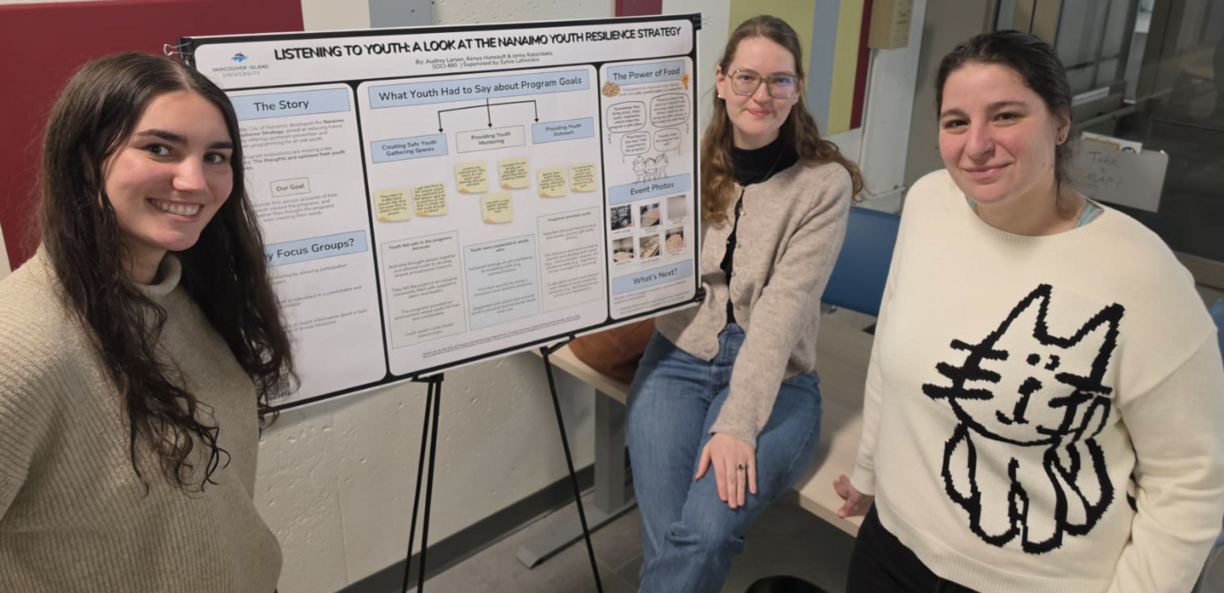
Three Vancouver Island University Psychology students stepped out of the classroom and into the community this spring to learn what really helps local youth.
Kenya Huneault, Audrey Larsen and Jenny Katsirdarkis worked with the City of Nanaimo to study youth programs supported through the city’s Youth Resilience Strategy.
The goal of their research was to find out what is working, what is not and what young people want and need. They also wanted to make sure youth voices were truly heard, noting that these voices are often missing when decisions are made about programs designed to support them.
The team held four small group sessions in February and March with 26 youth. Participants came from programs run with the Boys and Girls Club and the Central Vancouver Island Multicultural Society, with support from Nanaimo Foodshare.
Instead of using surveys, the students led open conversations so youth could speak freely and share honest thoughts. This approach helped the researchers better understand not just what programs offer, but how they make young people feel and why they matter in their daily lives.
The researchers said their results showed that these programs are making a strong, positive impact. Youth described the spaces as safe and welcoming, where they can relax, be themselves and make new friends. Many of them said they felt a sense of belonging and built confidence by trying new activities. “Both the data and personal reflections showed me that the programs are having a significant impact on the youth,” says Audrey.
Another key finding was the importance of caring adult leaders. Youth said leaders who listen, check in regularly and offer help when needed helped them feel safe and valued. Many also said their mental health improved, with less stress, anxiety and feelings of depression because they had a place they could go and feel supported.
The programs also help meet basic needs, which makes a big difference for participation. One finding stood out across the groups. “A main reason youth enjoyed the programs offered is that free food is provided,” says Kenya. “This has opened my mind to doing more research in the community about food insecurity.”
The project gave the students a chance to learn by doing. For Jenny, it was her first time leading a research project like this. Running it with limited experience meant “lots of along-the-way learning,” she says. The team had to stay flexible and adjust their approach as they worked, since each group of youth had different needs and responses.
There were some challenges along the way. Audrey says one of the hardest parts was “how to design a well-structured yet flexible research project that could reach youth across programs.” Kenya says keeping youth engaged also took effort. Another challenge was “trying to make the focus group engaging for adolescents and make it intriguing enough that they would even sign up in the first place.”
Overall, the experience helped the students better understand how research works in real life.
“I was surprised by how unique and different the research process has been for this project,” says Audrey. “This project challenged my perspective of research through the connections I have found and made within the community.”
Christy Wood, Manager of Social Development with the City of Nanaimo, says working the students was a pleasure and she’s grateful the group chose the Youth Resilience Strategy as the focal point of their research.
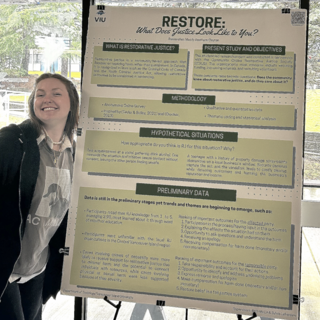
“Their thoughtful engagement with participating youth, active involvement in Steering Committee discussions and presentation of findings at a celebration event helped elevate youth voices in meaningful ways,” she says. “The resources they developed, including a poster board, one-page summary and a final report, provided valuable insights into program impacts, outcomes and recommendations for future improvements, all of which will support our overall project reporting.”
The project is also shaping what comes next for the students. “I have known for a while that I would like to contribute to the community through research and this project has provided me skills, experiences and connections that may help guide me towards this goal,” Audrey says.
For Jenny, the project offered a clearer picture of her future. “This project was an example of what practical applied research can look like and how all the stuff we’ve been learning can be used to make an impact in our community,” she says.
Kenya says the project has also helped shape her career direction. She has “wanted to do clinical research with adolescents, and now I know that these resources exist in the community I will provide them to my clients and their families.”
Jenny says the project offered a clearer picture of her future: “This project was an example of what practical applied research can look like and how all the stuff we’ve been learning can be used to make an impact in our community."
Kenya says the project has also helped shape her career direction. She has “wanted to do clinical research with adolescents, and now I know that these resources exist in the community I will provide them to my clients and their families.”
Related Posts