Female leaders share reflections in advance of International Women’s Day 2026
International Women's Day (March 8) is a global day celebrating the social, economic, cultural and political achievements of women.
The theme this year is Give to Gain: “When people, organizations and communities give generously, opportunities and support for women increase. Giving is not a subtraction, it's intentional multiplication. When women thrive, we all rise. Whether through donations, knowledge, resources, infrastructure, visibility, advocacy, education, training, mentoring, or time, contributing to women's advancement helps create a more supportive and interconnected world.”
VIU’s women leaders reflect on the trade-offs, resilience and community care that have shaped their paths – and how those experiences are expanding what leadership can look like.
Carolyn Russell, Vice-President Students
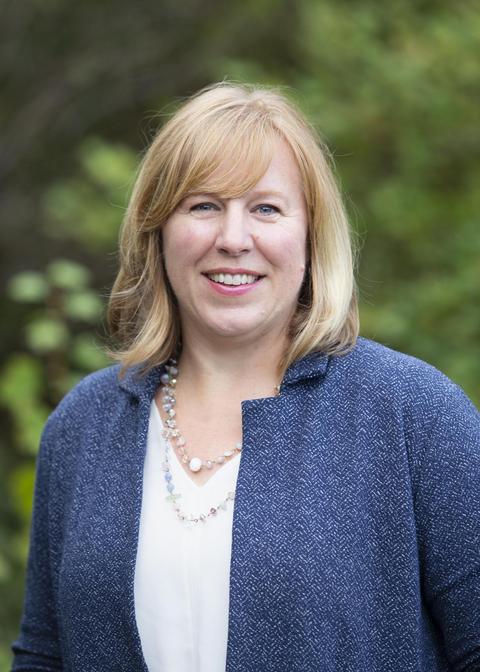
Across continents and cultures, I have witnessed the transformative impact of women’s leadership in higher education. Institutions are stronger, more innovative and more responsive to students when diverse voices are at the table and gender equity is prioritized.
Engaging with women leaders at the executive level has revealed remarkable resilience and resolve. Many have navigated systems not designed with them in mind, leading with clarity, collaboration and deep community commitment. Their experiences demonstrate that progress is intentional – driven by policy, mentorship, sponsorship and cultural change.
Conversations with students further reinforce that gender equity is not only about representation, but about influence, voice and access to opportunity. Achieving it requires sustained leadership commitment, accountability and the courage to challenge entrenched norms.
Let's continue our work together – across institutions, communities and borders – and build pathways that expand opportunity and ensure women’s leadership is not the exception, but the norm.
Dr. Katharine Rollwagen, Acting Dean, Faculty of Arts and Humanities
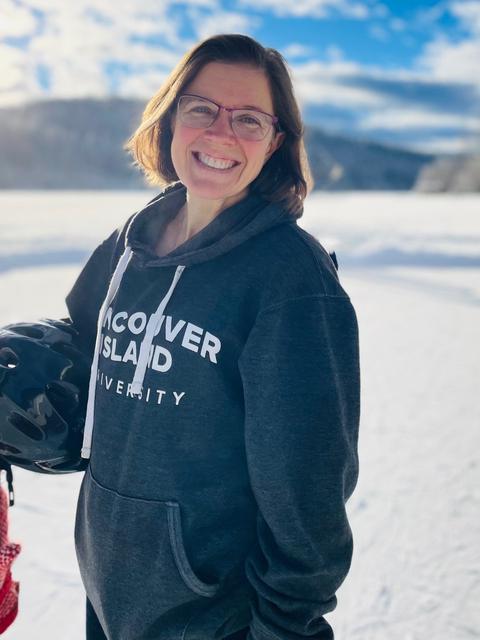
The theme of International Women’s Day this year is Give to Gain. For me, as a historian, it’s a reminder of the courageous women who have spoken out against inequalities and fought for their communities, families and children. Against racial segregation, sitting in a movie theatre. Against capitalist indifference, walking picket lines. Against colonial governments, standing on blockades and going on hunger strike (these examples from the last 100 years only; there are many other, and earlier, examples).
At the same time, I’m reminded of the women I work with every day, whose actions are less newsworthy but just as exemplary. Women in VIU's Faculty of Arts and Humanities who fill the food pantry for hungry students, speak out against transphobia and call for action on many issues shaped by gender, from affordable housing to domestic violence. They recognize what has been accomplished, and how much is left to do. They lead in classrooms, committees and departments. They give so much and those around them gain as a result.
What these inspiring women show me is that leadership is a practice rather than a position. I learn from their example about being compassionate, and open-minded, about reflecting on my own privilege, and about listening. I’m learning about feminist leadership, trying – through sometimes difficult conversations – to build relationships and collaborate with others, and acknowledge with gratitude the things we can give to each other, and the gains that follow.
Dr. Rachel Moll, Dean, Faculty of Education and Faculty of Academic and Career Preparation

My leadership journey has been shaped as much by constraint as by ambition. Some of the clearest lessons I’ve learned about leadership have come not from titles I held, but from opportunities I couldn’t pursue.
When my children were young and I was a faculty member, I remember looking at seats on Senate and Senate Standing Committees and knowing I couldn’t put my name forward. The meeting times collided perfectly with daycare pickups and school drop-offs. I wasn’t lacking interest or capability. I was constrained by a system that quietly assumed someone else was managing the home front. That realization stayed with me. It revealed how leadership pathways can unintentionally exclude women during the very years they are building both families and careers.
When I later stepped into a significant leadership role, our family made a pivotal decision: my spouse would stay home. We recognized that two full-time careers, layered on top of parenting, were unsustainable for us. It was a choice rooted in practicality, but it also underscored a broader truth – the pressures on working mothers are immense.
Living this experience has fundamentally shaped how I lead today. I carry an awareness of the invisible calculations many women are making every day – the trade-offs, the guilt, the negotiations behind the scenes. It pushes me to create space for honest conversations about workload, flexibility and ambition. I want my female colleagues to know that discussing work-life integration is not a weakness, but a leadership conversation. Wherever possible, I aim to offer tangible support: flexibility, advocacy, mentorship and, perhaps most importantly, understanding.
Mentorship has been pivotal in my own career. Yet when I reflect on those who guided me into leadership, I realize most were men. I am deeply grateful for their support, but I also recognize the power of representation. Seeing someone who has navigated similar societal expectations – and succeeded – can shift what feels possible.
I hope to be that presence for others. At VIU and in my community work, I strive to make both the challenges and the strategies visible. I speak openly about the trade-offs, the missteps, the negotiations and the resilience required. If aspiring post-secondary female leaders can see a path that acknowledges real life rather than denying it, then I am contributing not just to individual careers, but to a more inclusive model of leadership.
Dr. Sally Vinden, Interim Campus Administrator, Cowichan campus

I am a first-generation university graduate and a female leader in post-secondary education. In my family, higher education was not assumed. My parents, shaped by their experience during the Second World War, valued hard work and resilience. Academic aspiration was not something they imagined for their daughters. I began my career as a hairstylist – a profession grounded in skill, creativity and fashion, which I loved. It was rewarding work, and it ultimately opened the door to a teaching role in post-secondary education.
Once immersed in teaching and learning, I discovered a deep passion for education. Yet early on, my confidence did not always match that passion. Without a family history in academia, I often felt I was learning the culture as I navigated it. While I did not always name it as such, I learned that credibility needed to be earned and re-earned. Those experiences shaped not only my work ethic, but my understanding of how gender and background can influence one’s sense of belonging in leadership spaces.
The turning point in my journey was the mentorship of remarkable colleagues and educators who modelled thoughtful, values-driven leadership. Through their encouragement, I completed a master’s degree and ultimately my PhD in 2020 at Simon Fraser University. My mentors’ belief in me expanded my sense of what was possible.
I have come to appreciate the strength of those in leadership: their capacity to build community and to advance change while remaining grounded in their values. Many of those who influenced me held formal leadership roles; others led from where they were. All demonstrated that leadership is more about lifting others than it is about personal achievement.
Today, as Interim Campus Administrator for the Cowichan Campus, I carry those lessons forward. I am committed to creating environments where emerging leaders feel a stronger sense of belonging than I initially did, where mentorship is intentional, and where potential is recognized early and nurtured deliberately. My journey has taught me that authentic leadership is not only about reaching milestones, but about ensuring that the path becomes more accessible for those who follow.
Related Posts