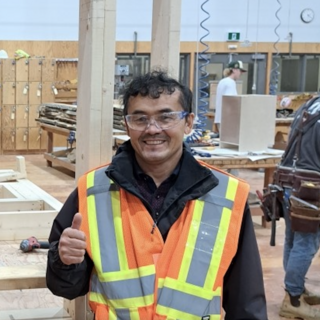
VIU tiwšɛmawtxʷ students gain hands-on experience
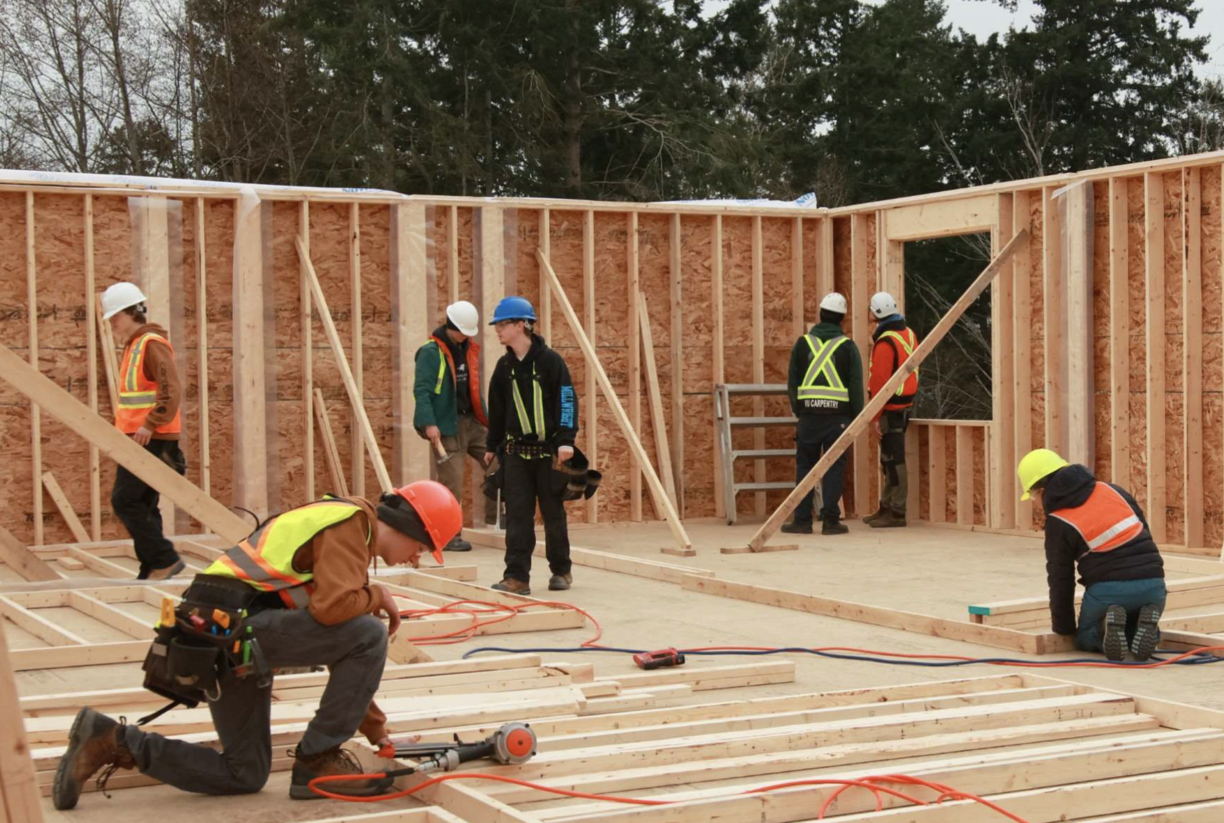
On an otherwise-quiet stretch of land in tišosǝm, the bang of hammers and roar of saws are the sounds of a legacy being built.
The structure rising from the ground is not just part of a VIU tiwšemawtx" Carpentry course. The homes they're building will stand in the community long after the term ends.
Carpentry student Elisha Manson, for example, did not arrive at carpentry in a typical way. After years working as a registered midwife, followed by a Master's degree in Health Administration, she found herself at a turning point while on maternity leave. "I was having trouble deciding what I wanted to be when I grew up," she says. "My cousin called it a 'mid-wife crisis'."
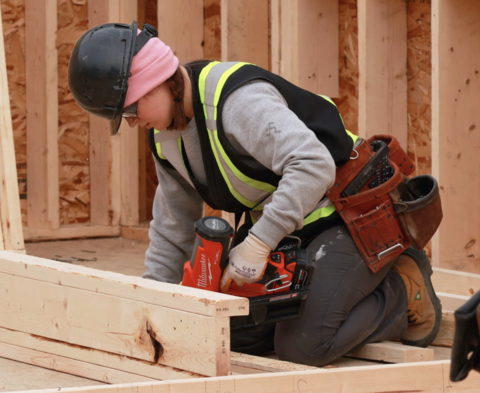
Building had always been part of her family story, but geography and life commitments made it difficult to pursue.
When Elisha learned about the local carpentry program, it felt like a rare opportunity to stay rooted while trying something new. "I wanted to be more handy," she says. "I wanted skills I could share with my kids.”
Those skills came quickly, but not in isolation. Elisha and her classmates worked together through every stage of construction, from preparing the site to framing the structure.
What they built was not a practice project. It was a home. "I literally knew only 'drill' and 'hammer' before starting," she says. "To build a house that will become a family's home, that's something I'll always carry with me."
For Dustin Wesley, a member of Tla'amin Nation, the experience carried a different but equally personal weight. He joined the program with a clear goal in mind. "I wanted to build a solid career for myself and learn skills I can actually use for the rest of my life," he says. "I've always liked working with my hands."
Working on homes within his own community added another layer of meaning. "Being part of building something that will be in the community for years was a really good feeling," Dustin says. "It made me proud to be a part of it."
That sense of purpose is something instructor Jonathon Bratseth sees every year. He describes the program less as a classroom and more as a reflection of the job sites students will eventually join.
"Construction opportunities are consistently available in town," he says. "Companies are looking for people who understand how to build, how to work safely, and how to show up as part of a team."
Students spend time on active job sites and complete a work placement with local contractors, often forming connections that continue beyond the program. For Jonathon, those relationships are part of a longer tradition. "Contractors have been mentoring students here for more than 15 years," he says. "That mentor- ship is what defines the trades."
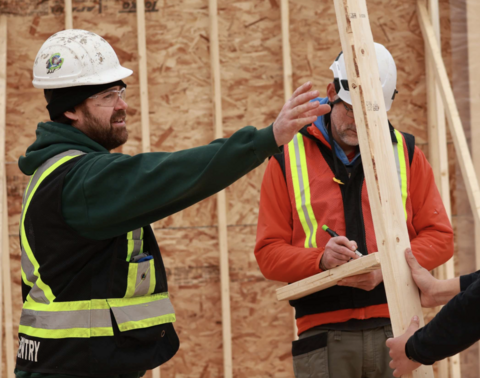
In recent years, that network has expanded through a partnership with the Tla'amin Nation. Together, they have taken on housing projects that meet a real and immediate need in the community. Students contribute their labour while learning in a setting that carries deeper cultural meaning.
For Elisha, working in tišosǝm shaped her experience in ways she did not expect.
"Being there intertwined the physical act of building with the history of where we all live," she says. "We were welcomed into the community, and that changed how the work felt."
Carmen Galligos, Director of Public Works and Capital Infrastructure for Tla'amin Nation, sees the impact from both sides.
"This partnership creates meaningful opportunities for hands-on learning," she says. "Students gain real-world experience while contributing to much-needed housing for Tla'amin families. At the same time, it strengthens community well-being."
Back on site, the learning is constant and often collaborative. Students compare notes, trouble- shoot problems, and develop a shared rhythm. Many arrive with little or no experience. What they leave with is harder to measure.
For Dustin, that includes confidence as much as skill. "Throughout the program I learned how to work hard, stay focused, and build things that matter," he says. "I plan to keep working in the trade and keep improving."
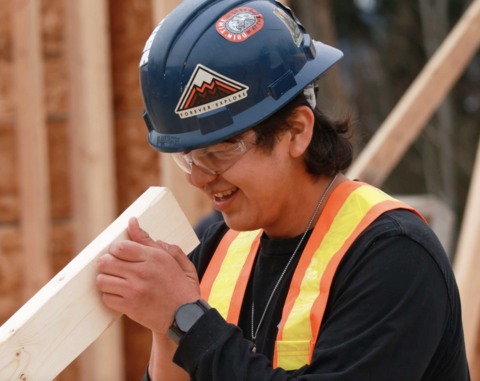
For some, the program becomes a pathway into a new career. For others, it is about building something closer to home. For Elisha, it is both. "I want to use these skills and not lose them,” she says. "I want to pass them on, especially to my son."
She imagines future projects, both practical and aspirational. Contributing to local trails. Building spaces that support families and elders. The scale may vary, but the intention is the same. "I just want to keep building," she says.
In qathet, where the demand for skilled trades continues to grow, the impact of programs such as this is often measured in workforce numbers. But on the ground, the story feels more personal than that. It is about people finding direction, strengthening community ties, and shaping the places in which they live in a very real way.
The houses will stand for decades. The experience of building them tends to last just as long.
This article originally appeared in qathet Living and is reprinted by VIU with permission.
Related Posts