When rain hits the road, it carries a hidden threat downstream as a cocktail of contaminants are transported to streams through stormwater drains. Dr. Erik Krogh, a Vancouver Island University Chemistry Professor and Co-director of the Applied Environment Research Laboratories (AERL), is studying how this pollution affects local salmon streams in collaboration with the BC Conservation Foundation.

One of these contaminants, known as 6PPD-quinone (6PPDQ), leaches from tiny tire wear particles left behind on the road. It forms when a common tire additive reacts with oxidants in the air. It is acutely toxic to coho salmon even at extremely low concentrations.
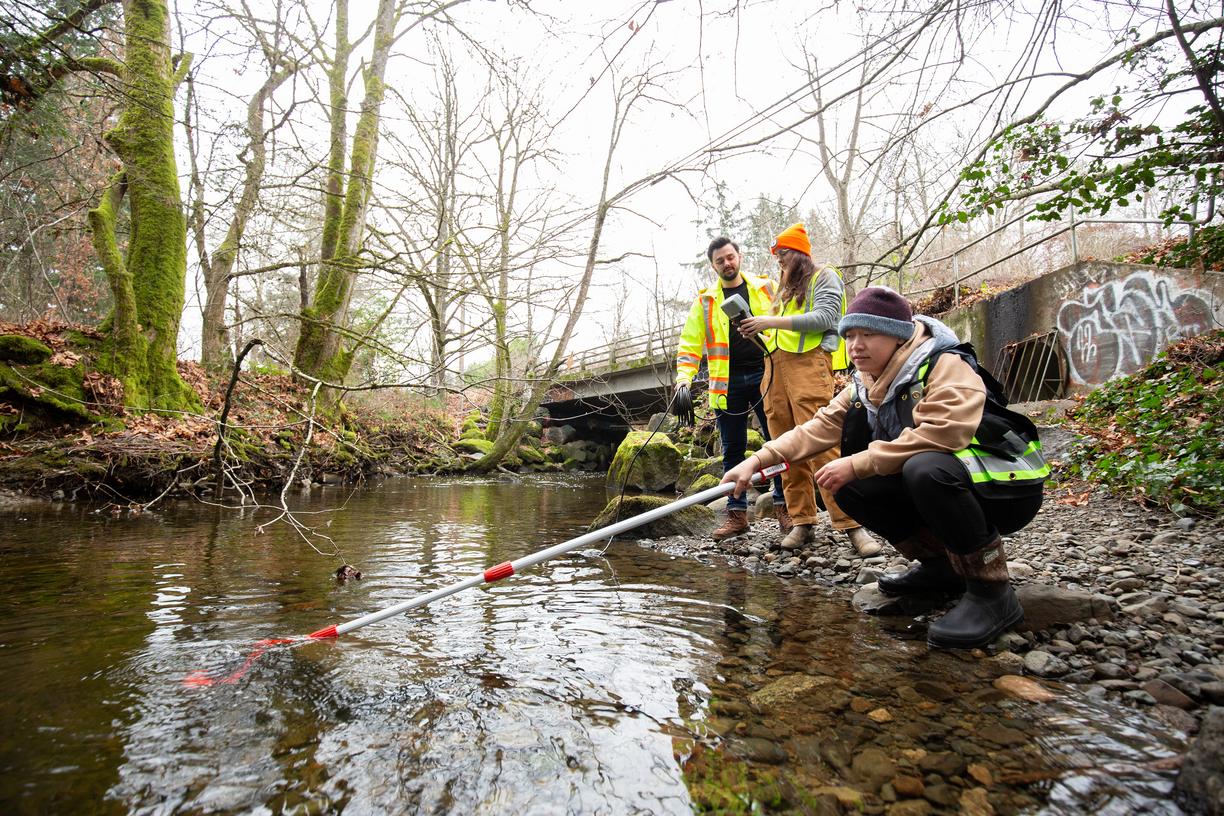
Krogh and his team are leading a large-scale study to understand when and where this tire-wear toxin appears in waterways across Vancouver Island. The project includes 35 local groups, citizen scientists and First Nations, sampling more than 60 waterways at 140 sites between Victoria and Campbell River.
By collecting water samples during rainstorms, the researchers have found the highest 6PPDQ levels in areas with heavy traffic and lots of paved surfaces, where tire dust is quickly washed into storm drains and fish habitat. Concentrations can spike rapidly during storms, sometimes reaching levels that harm fish.
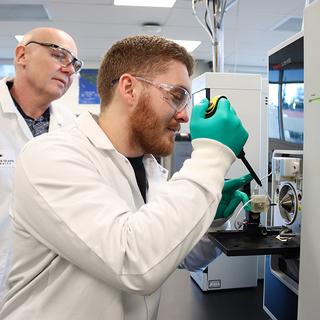
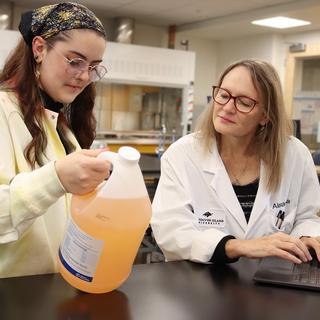
Graduate students Joseph Monaghan and Angelina Jaeger helped develop an innovative rapid testing method at VIU with support from the Natural Sciences and Engineering Research Council of Canada, allowing the team to analyze more than 100 samples a day at parts-per-trillion levels.
The study has identified high-priority stormwater outfalls affecting small, fish-bearing streams in the urban landscape. Krogh and his partners are now testing rain gardens and filtration systems and developing “stream report cards” to help guide future solutions.
We caught up with Krogh to learn more about his research and what he’s discovered so far.
What patterns are you seeing?
Tire wear chemicals are usually found in small urban streams where there is a lot of impermeable surface and lots of cars. Tire wear toxins show up in the stream because rainwater washes them off the roads and into nearby creeks through storm drains. Levels can change a lot depending on the amount of rainfall and runoff occurring.
What areas will remediation efforts focus on?
Some stormwater outlets are more important to watch than others. High-priority spots are where 6PPDQ often shows up at levels above safe limits, and where the water flows into small streams that have fish. Coho salmon are very sensitive and live in these small creeks during their first year, so they can be affected by multiple rain events.
What will remediation efforts look like?
There are several ways to clean stormwater. Nature-based solutions, like rain gardens and wetlands, slow down water, help it soak into the ground and make the water cleaner before it reaches streams. These areas also reduce erosion and create habitats for beneficial insects and other animals. In places where this is hard to do, we are also testing “end-of-pipe” solutions that treat water right at the outfall or downspout.
Can you tell us a more about the stream report cards?
Stream report cards are short summaries of what we learned over three years of monitoring. They show how often and how much 6PPDQ is in a waterway and point out possible sources. These report cards help the public and government officials understand the problem and make decisions about future development or cleanup efforts.
Anything else you would like to add?
Stormwater in cities can carry other toxic chemicals, like metals and persistent organic compounds, that harm the environment. We are working with First Nations and local Island governments to learn more and help remove these toxic chemicals from stormwater before they reach natural waterways.
Related Posts